
Sleep can affect how teens feel, think, learn, and respond to the world around them. But knowing that sleep matters and understanding your own sleep habits are two different things.
One simple place to start is by paying attention.
Tracking sleep for a week can help teens notice patterns in how much they sleep, how well they feel they slept, and what they might want to change. Instead of beginning with a list of rules about what they should be doing, a sleep tracker gives young people a chance to observe their own experience and reflect on what they discover.
Start With a Week of Sleep
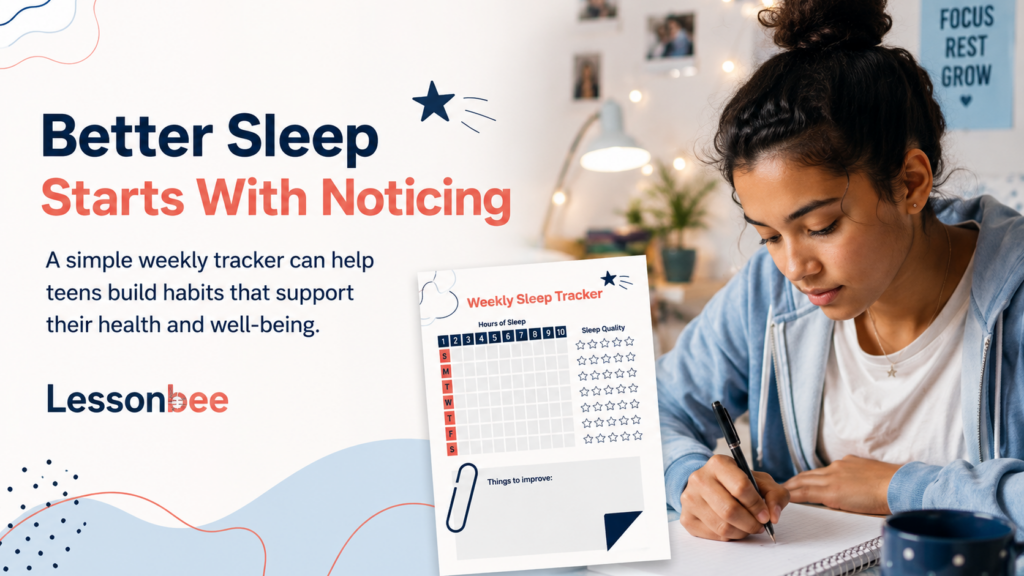
The Lessonbee Weekly Sleep Tracker gives teens a simple way to record their sleep over seven days. Each day, they can track:
- how many hours they slept
- how they would rate the quality of their sleep
- things they might want to improve
The goal isn’t to have a perfect week. It’s to create a clearer picture of what sleep actually looks and feels like from day to day.
Look for Patterns, Not Just Hours
Hours of sleep are only one part of the picture. Two nights with the same amount of sleep may not feel the same the next morning.
After completing the tracker, teens can look back over the week and consider questions like:
- Which nights felt the most restful?
- Which nights felt the least restful?
- Did getting more sleep always mean better sleep?
- Was anything different about the days or evenings before better or worse nights?
- Is there one thing I would like to try differently next week?
These questions turn tracking into reflection. They also give parents and educators an opportunity to have conversations about sleep without making the conversation entirely about what a young person is doing “right” or “wrong.”
Sleep Can Be Connected to What We’re Experiencing
Sometimes sleep habits are influenced by schedules and routines. Other times, difficulty sleeping can be connected to stress or difficult experiences.
That’s one reason sleep is explored within Lessonbee’s Trauma and Sleep Disorders lesson. Students follow Carter and Linda Ortega, two young people experiencing PTSD after witnessing a disturbing event. Through their story, learners explore trauma and PTSD, sleep disorders, trauma-related stress and coping, self-compassion, gaslighting, personality disorders, and related topics.
The lesson helps students consider sleep as part of a larger picture of mental and emotional health rather than treating it as an isolated behavior.
From Awareness to Action
A sleep tracker isn’t meant to diagnose a sleep problem. Its value is much simpler: it helps make an everyday experience visible.
Once teens begin noticing their own patterns, they can decide whether there is something they want to change. That might mean experimenting with a different routine, thinking about what seems to interfere with restful sleep, or talking with a trusted adult when sleep difficulties are persistent or concerning.
That process of noticing, reflecting, and making an informed choice is an important health skill in itself.
Keep Learning With Lessonbee
The Trauma and Sleep Disorders lesson is part of the Lessonbee Health Leaders learning program. Students explore the experiences of Carter and Linda while building their understanding of trauma, PTSD, sleep disorders, coping methods for trauma-related stress, and other factors that can affect mental and emotional health. The lesson aligns with national health education standards as well as standards from New York, California, Texas, Massachusetts, and Washington, D.C.